
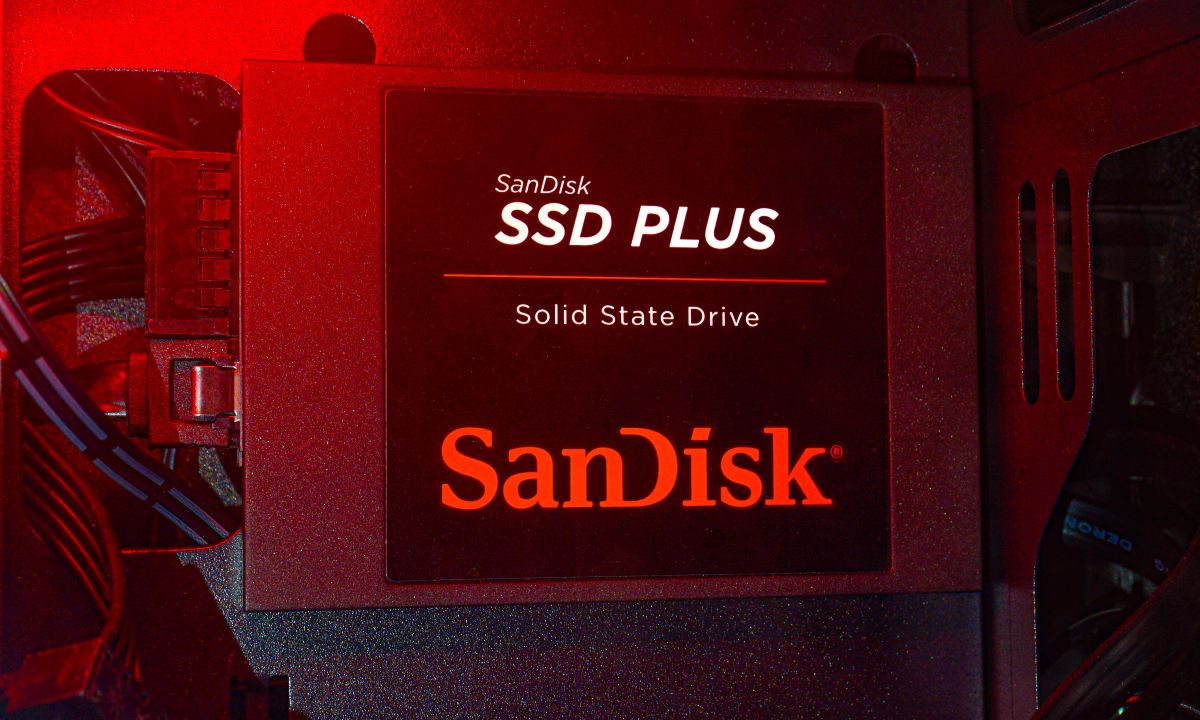

Memory chip stocks surge 1,100% as AI infrastructure reveals critical bottleneck
SanDisk shares have surged 1,100% since August as AI infrastructure spending exceeding $500 billion annually creates persistent shortages in high-bandwidth memory chips. The rally extends across Micron, Western Digital, and SK Hynix—all tripling since August—marking a strategic shift from megacap tech stocks to essential hardware suppliers powering AI processors.
Overview
The boom emerged through 2025-2026 as AI models’ data requirements exposed memory as a choke point in sustained AI capital expenditure. Hedge funds including DE Shaw gained billions on memory stock holdings. The trend gained prominence at the Davos World Economic Forum, where industry leaders acknowledged the supply-demand imbalance persisting until at least 2028 due to manufacturing costs and production cycles.
Data Evidence:
– SanDisk: Up 1,100% since August, doubled since January
– Micron, Western Digital, SK Hynix: Tripled since August
– AI infrastructure spending: Exceeding $500 billion in 2026
Expert Perspective:
“By any measure, that’s an eye-watering few months. The narrative [in the AI rally] has shifted to memory being the choke point in the sustained AI capex build-out.”
— Arun Sai, Multi-Asset Strategist at Pictet Asset Management
Analysis: This validates investor recognition that AI infrastructure requires specialized components beyond general computing power, creating concentrated value in memory suppliers.
“The use for this high-bandwidth memory [in AI] has just exploded.”
— Rene Haas, CEO at Arm
Nvidia CEO Jensen Huang called AI memory “the largest storage market in the world,” underscoring the structural demand shift.
Why this matters
For MENA fintech: While no direct regional transaction impacts were reported, this supply constraint affects AI adoption economics across Dubai, Riyadh, and Abu Dhabi fintech ecosystems. Regional players deploying AI for fraud detection, credit scoring, or customer service face elevated infrastructure costs through 2028, potentially disadvantaging capital-constrained startups relative to established banks.
Global alignment: This mirrors 2025’s record AI venture capital deployment. MENA fintech hubs pursuing Vision 2030 and D33 digital economy targets require similar computational infrastructure for scaling. The memory bottleneck reinforces that AI transformation demands physical hardware investments, not just software innovation.
What’s next
What to watch: Memory manufacturers’ capacity expansion timelines, hedge fund position changes in Q1 2026, and whether hyperscalers like Amazon and Meta secure preferential supply agreements that could further constrain availability for regional players.
Conclusion
This development confirms AI’s transition from experimental technology to critical infrastructure, positioning memory suppliers as essential enablers for fintech’s next evolution.
Sources: PYMNTS, Financial Times

