
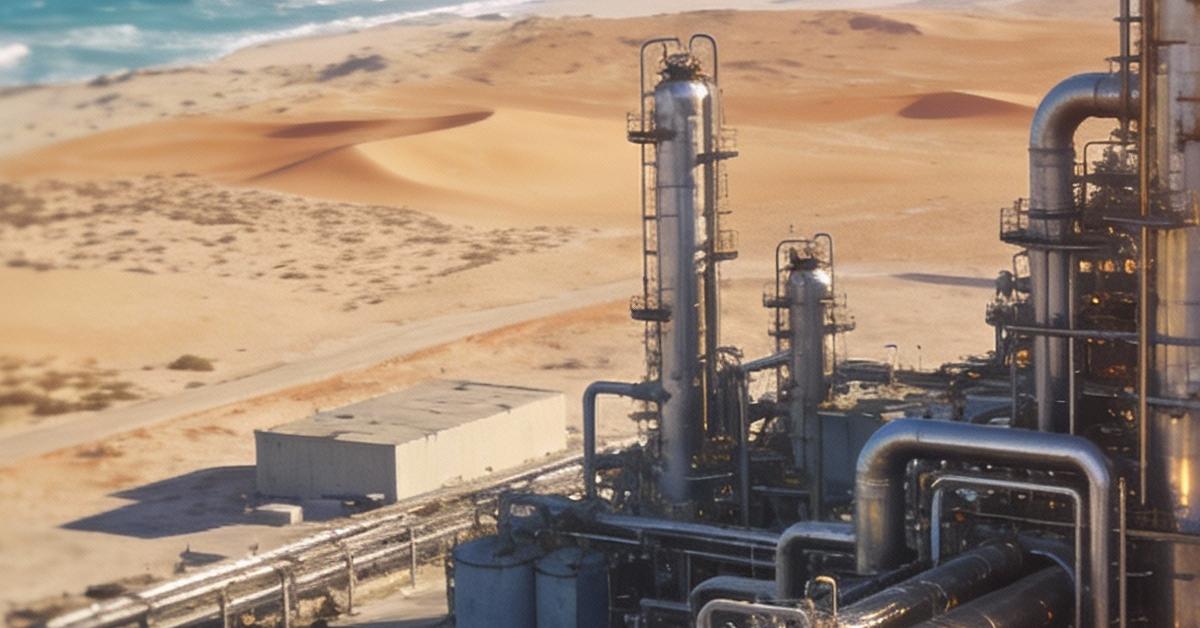

Libya’s $20 billion energy investment as North African revival catalyst
Libya unveiled a $20 billion energy investment program at LEES 2026, targeting 2 million barrels per day (bpd) oil production by 2030 and signaling post-conflict stabilization for North Africa’s energy sector. The initiative, spanning 15 companies with contracts extending to 25 years, builds on 2025’s average output of 1.375 million bpd—the highest rate in years.
Overview
At the Libya Energy & Economic Summit (LEES) 2026 in Tripoli, the government formalized partnerships to scale oil production from current levels to 2 million bpd by 2030. Gas production is projected to reach 700–750 million standard cubic feet per day (scf/d) in 2026, routed through the Greenstream pipeline to serve domestic demand and European exports. The Africa Energy Bank, led by the African Petroleum Producers’ Organization (APPO) and Afreximbank, will finance cross-border infrastructure including a Libya-Algeria gas interconnector.
Core facts
Libya averaged 1.375 million bpd in 2025, marking a significant recovery milestone. The 25-year contract structure mirrors stability frameworks in emerging markets like Namibia’s 5% royalty model. Gas exports leverage partnerships with Egypt, which provides LNG infrastructure capacity to monetize Libyan reserves for Mediterranean and European markets.
Expert perspective
“We witnessed the highest production rate in years, averaging 1.375 million bpd, which is a strong testimony to our recovery and stability.”
— Dr. Khalifa Abdulsadek, Minister of Oil and Gas
Analysis: This production milestone validates Libya’s operational resurgence after prolonged conflict, positioning the nation to reclaim its role as a major Mediterranean energy supplier.
“One of Libya’s greatest opportunities lies in its geographical location near one of the largest and most affluent markets in the world.”
— Dr. Philip Mshelbila, Secretary General at Gas Exporting Countries Forum
Analysis: Libya’s proximity to Europe creates a strategic advantage for gas exports as the continent seeks alternatives to Russian supply routes.
“Libya’s resurgence is a critical turning point for African energy.”
— NJ Ayuk, Executive Chairman at African Energy Chamber
Analysis: This frames Libya’s recovery within continental energy ambitions, particularly gas-led transitions supporting industrial growth across Africa.
Why this matters
Libya’s stabilization creates spillover effects for MENA fintech infrastructure. Afreximbank’s deployment of the Africa Energy Bank highlights urgent demand for specialized trade finance platforms, cross-border payment rails, and blockchain-based commodity tracking systems—all core fintech opportunities. The 25-year contract horizon requires sophisticated project finance structuring, risk assessment tools, and regulatory technology (regtech) to manage multi-jurisdictional compliance from Tripoli to Cairo to Algiers.
Regional energy partnerships with Egypt and Turkey strengthen North Africa’s role in Europe’s energy transition, potentially driving demand for carbon credit platforms and ESG-focused investment products across MENA markets. The infrastructure-heavy model aligns with Saudi Vision 2030 and UAE’s D33 emphasis on industrial diversification beyond hydrocarbons.
What’s next
What to watch next: Production ramp timelines toward the 2 million bpd target, Egypt gas monetization agreements, and Africa Energy Bank’s first tranche deployments in Q2 2026.
Conclusion
Libya’s trajectory reinforces North Africa’s emergence as a critical energy corridor, with financial technology requirements expanding alongside physical infrastructure buildout.
Sources: Zawya

